
English| EUR
Suggested for you
More currencies
Choose a language
Torquay sits at the western gateway to Victoria's Surf Coast, where consistent swells meet accessible beach breaks and protected point breaks. This guide evaluates wave quality, seasonal patterns, and the conditions that make Torquay a training ground for surfers at every level.
Quick answer
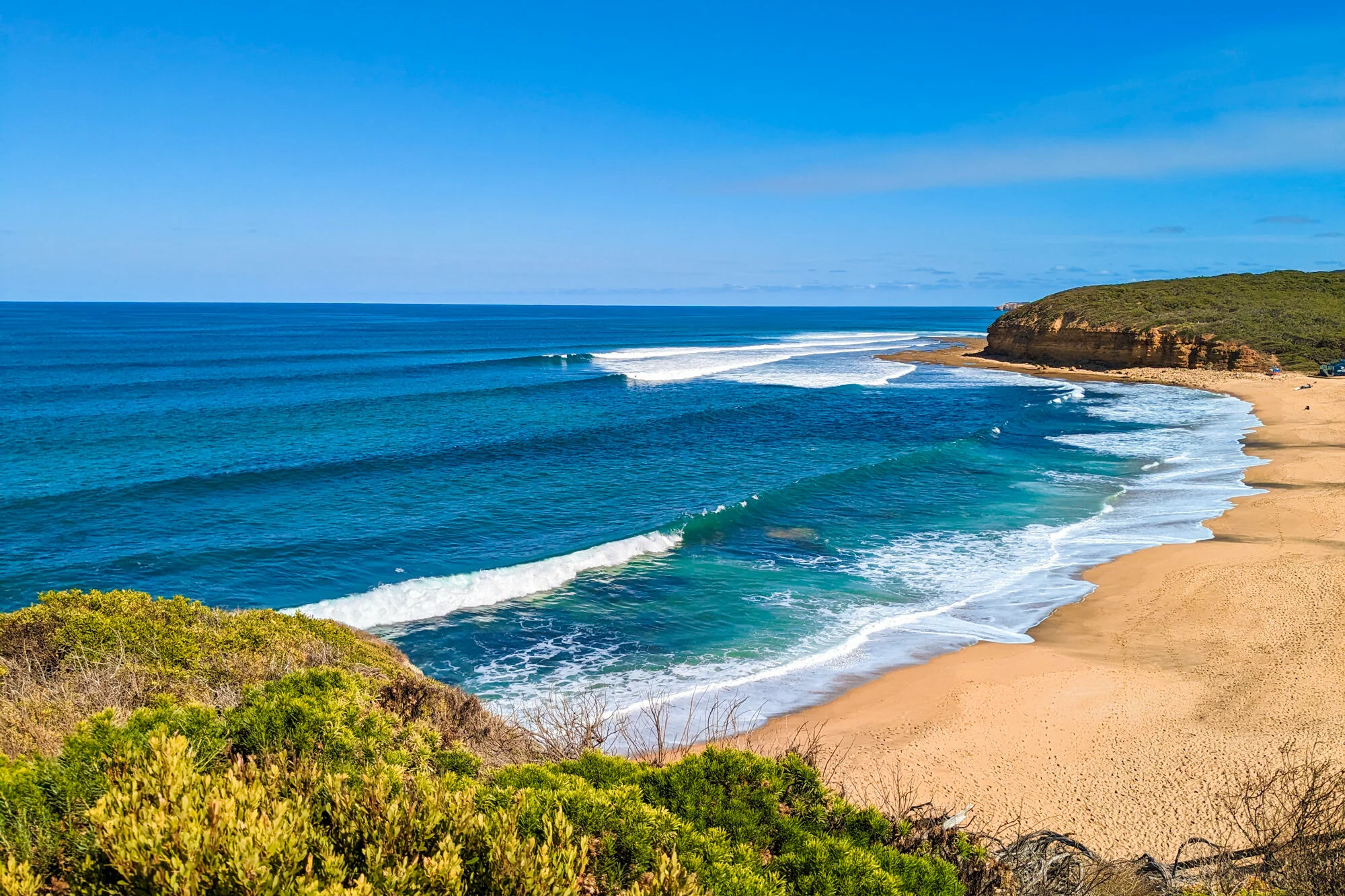
Is Torquay good for surfing? Yes—Torquay offers consistent year-round waves ranging from gentle beach breaks at Fishermans Beach to powerful reef breaks at Bells Beach, making it suitable for beginners through to professionals. The town's south-facing coastline captures Southern Ocean swells reliably, with offshore morning winds creating clean conditions most days between autumn and spring.
Torquay Surf Beach faces southeast into Bass Strait, a positioning that delivers swell consistency unmatched along Victoria's coast. The beach receives groundswell from Southern Ocean storms year-round, with wave heights ranging from waist-high rollers in summer to overhead sets during winter's peak. Unlike sheltered bays further east, Torquay's exposure means rideable surf arrives on nine out of ten days. The question of whether Torquay suits different skill levels comes down to break selection. Fishermans Beach, located at the eastern end of town, offers forgiving sand-bottom waves that reform gently—perfect for first-timers learning to stand. The central stretch of Torquay Front Beach presents medium-energy peaks suited to intermediate surfers refining turns and timing. Three kilometers southwest, Bells Beach delivers hollow right-hand barrels over reef, a wave that has hosted the Rip Curl Pro since 1961 and demands advanced wave knowledge. Wind direction controls session quality more than swell size. Northwesterly breezes blow offshore at Torquay from late autumn through early spring, grooming wave faces into clean walls. By mid-morning most days, sea breezes swing onshore from the south, chopping surface conditions—this is why local surfers paddle out between six and ten in the morning. Water temperature drops to thirteen degrees Celsius in August, requiring full wetsuits with booties and hoods, but remains swimmable with appropriate thermal protection. Torquay's surf infrastructure reflects its role as a testing ground. The town birthed both Rip Curl and Quicksilver, and their flagship stores line the Surf Coast Highway alongside board shapers, wetsuit outlets, and rental workshops. Surf schools operate daily from Fishermans Beach, offering coached sessions in the protected shorebreak. Experienced surfers migrate to Winki Pop and Point Addis when swells exceed two meters, seeking longer rides on the point breaks that define Victoria's reputation. The combination of reliable swell window, varied break types, and structured learning environments answers the central question clearly. Torquay delivers quality surf across all skill levels, provided riders match their ability to the correct beach and arrive during the morning's offshore window.
“Torquay's south-facing coastline captures Southern Ocean swells on nine out of ten days, with offshore morning winds creating clean conditions between autumn and spring.”
The best arrival window is 06:00–10:00, which offers optimal wind conditions and smaller crowds before the afternoon sea breeze sets in. Targeting this morning period ensures cleaner waves and a more manageable environment for learning or practice.
—
Wind is typically offshore, creating smooth, clean surf conditions for beginners.
Warm air 20-26°C, water 17-19°C
Larger crowds are common, requiring early arrivals to secure a space.
Mild air 15-20°C, water 16-18°C
The swell is often more consistent with lighter winds during these months.
Cool air 10-14°C, water 13-15°C
Swells are larger and more powerful, generally better suited for experienced surfers.
Verdict: For the highest quality conditions, aim for weekday mornings between 06:00 and 10:00 during the months of March, April, or May.
Torquay provides a accessible environment for beginners and families, featuring controlled wave conditions and extensive beach infrastructure. The coastline is well-suited for those learning to surf, offering gradual entry points and proximity to professional instruction.
The promenade and beach access paths are paved and wide, allowing for easy movement with strollers from the car park to the sand. Beach wheelchairs are available through local council programs for those requiring assistance on the sand.
Children as young as five years old can participate in shallow water activities, while formal surf instruction is generally tailored for those aged seven and up. The gentle, rolling white water near the shore is appropriate for younger children to practice balance.
Public amenities including toilets, change rooms, and outdoor showers are located directly at Torquay Surf Beach. These facilities simplify the logistics of managing children before and after water sessions.
Public picnic tables and sheltered areas are situated along the foreshore, providing a space for families to eat. A variety of cafes within walking distance offer family-appropriate food options.
Torquay Surf Beach remains accessible to the public throughout the week. Visitors may access the beach at any time of day.
Torquay's surf beaches are shared spaces where respecting local etiquette keeps sessions safe and enjoyable. Following Victorian surf safety guidelines and lineup protocol protects both you and others in the water.
Everything you need to know about is torquay good for surfing
Yes, Torquay features sheltered breaks that provide a safe environment for those learning to ride waves. Experienced instructors offer guided sessions to help newcomers understand board control and water safety.
The coastline benefits from consistent swells originating from the Southern Ocean, which generate clean lines across the sandy breaks. These geographical features ensure that surfers find a variety of conditions suitable for different skill levels.
Visitors should target the 06:00–10:00 window to take advantage of offshore winds and smaller crowds. This time of day typically offers the calmest water before the afternoon sea breeze sets in.
The water temperature remains cooler during winter, requiring a high-quality wetsuit for comfort. Despite the chill, the consistent swell makes it a rewarding location for those prepared for the seasonal climate.
Access to public beaches in the area is free of charge. You can enjoy the coastal environment without paying any entrance fees.
Many local beaches are well-suited for families due to the presence of patrolled areas and calm, sandy shallows. These spots are excellent for children to build confidence in the water under supervision.
To make the most of your trip, consider booking professional lessons to navigate the local conditions safely. Our resources can help you identify the right sessions for your skill level.
Yes, the beach remains open for access every day of the week from 00:00–23:59. This accessibility allows surfers to plan their sessions based on tide times and personal schedules.